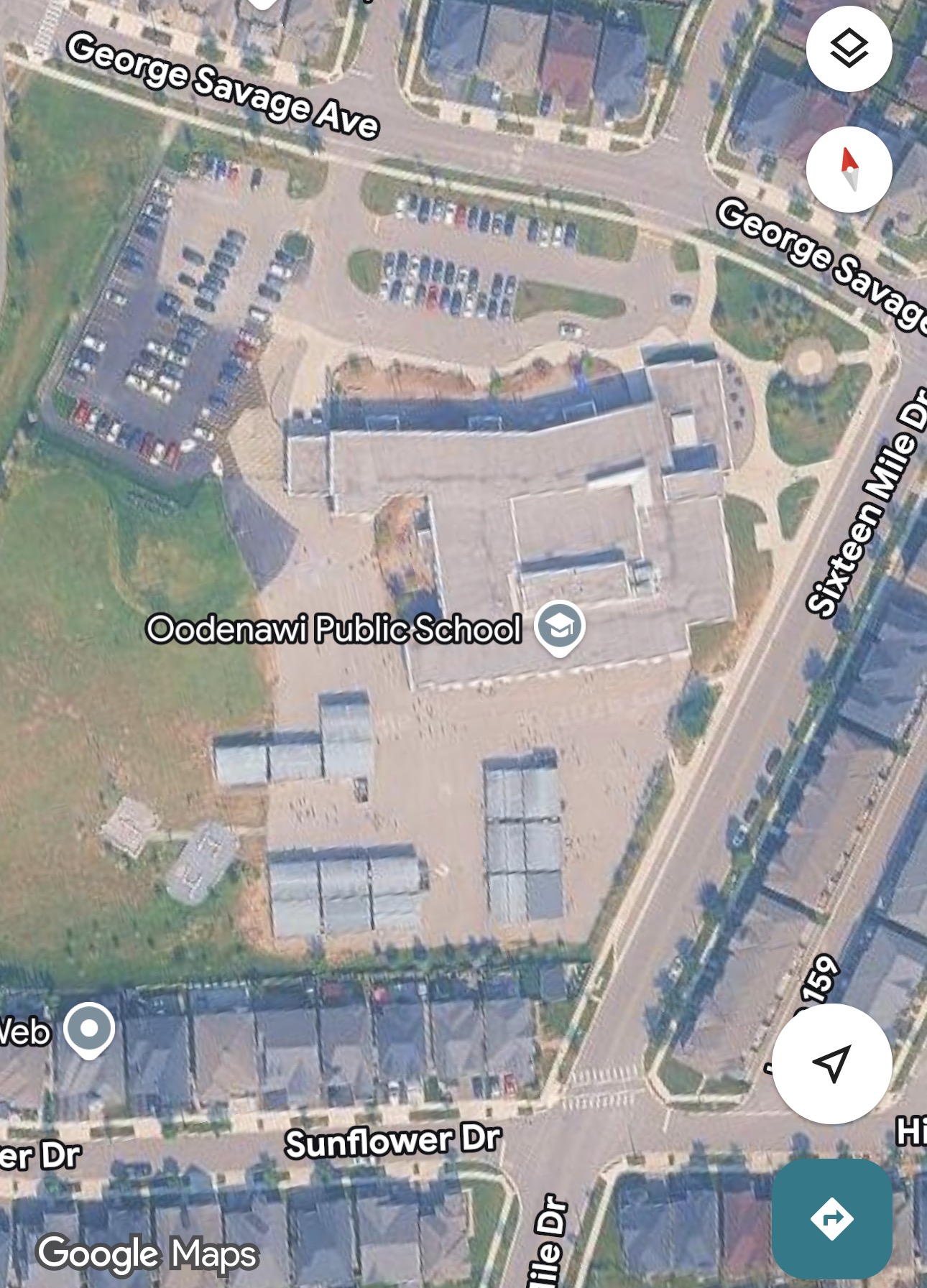
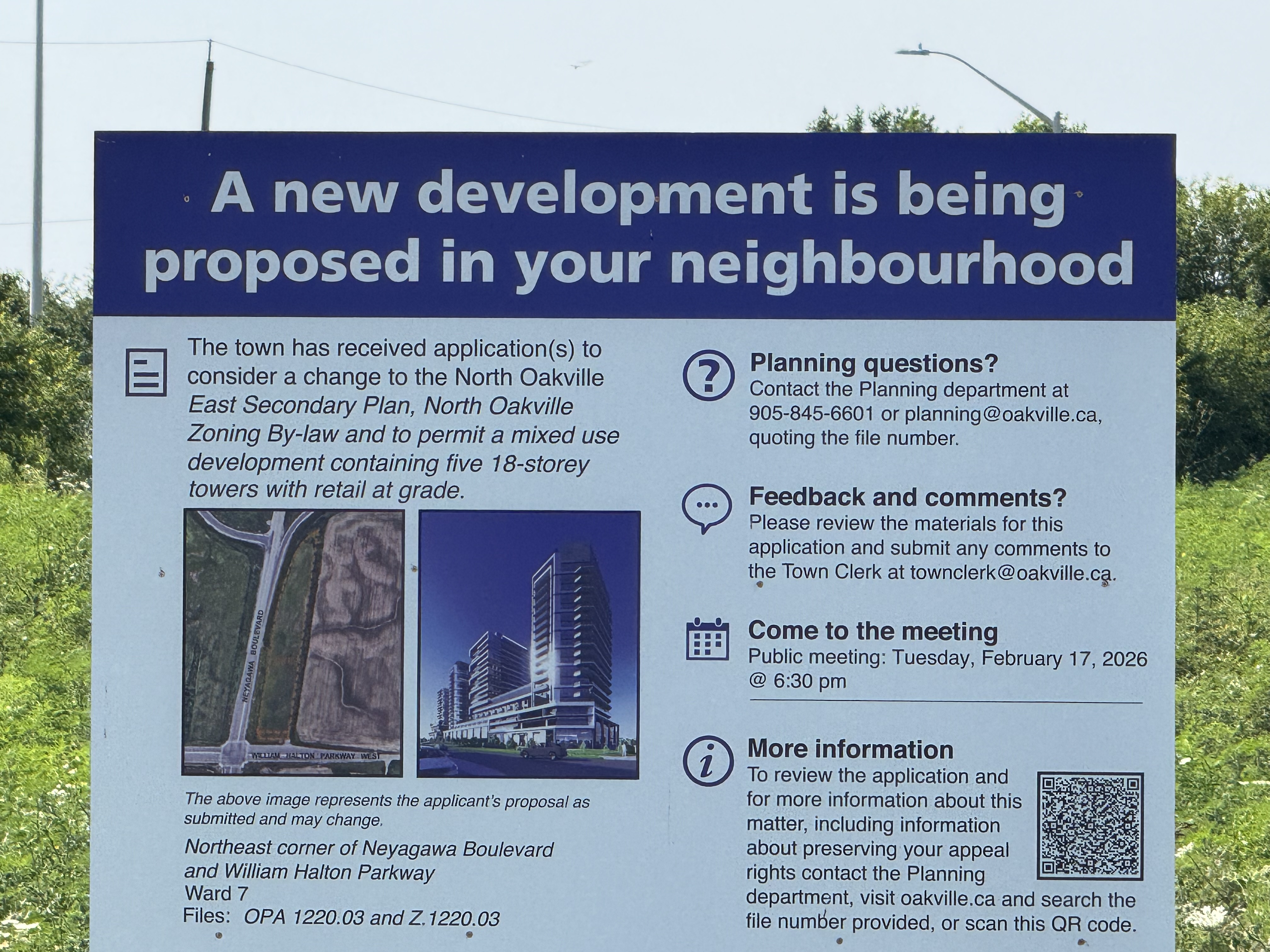
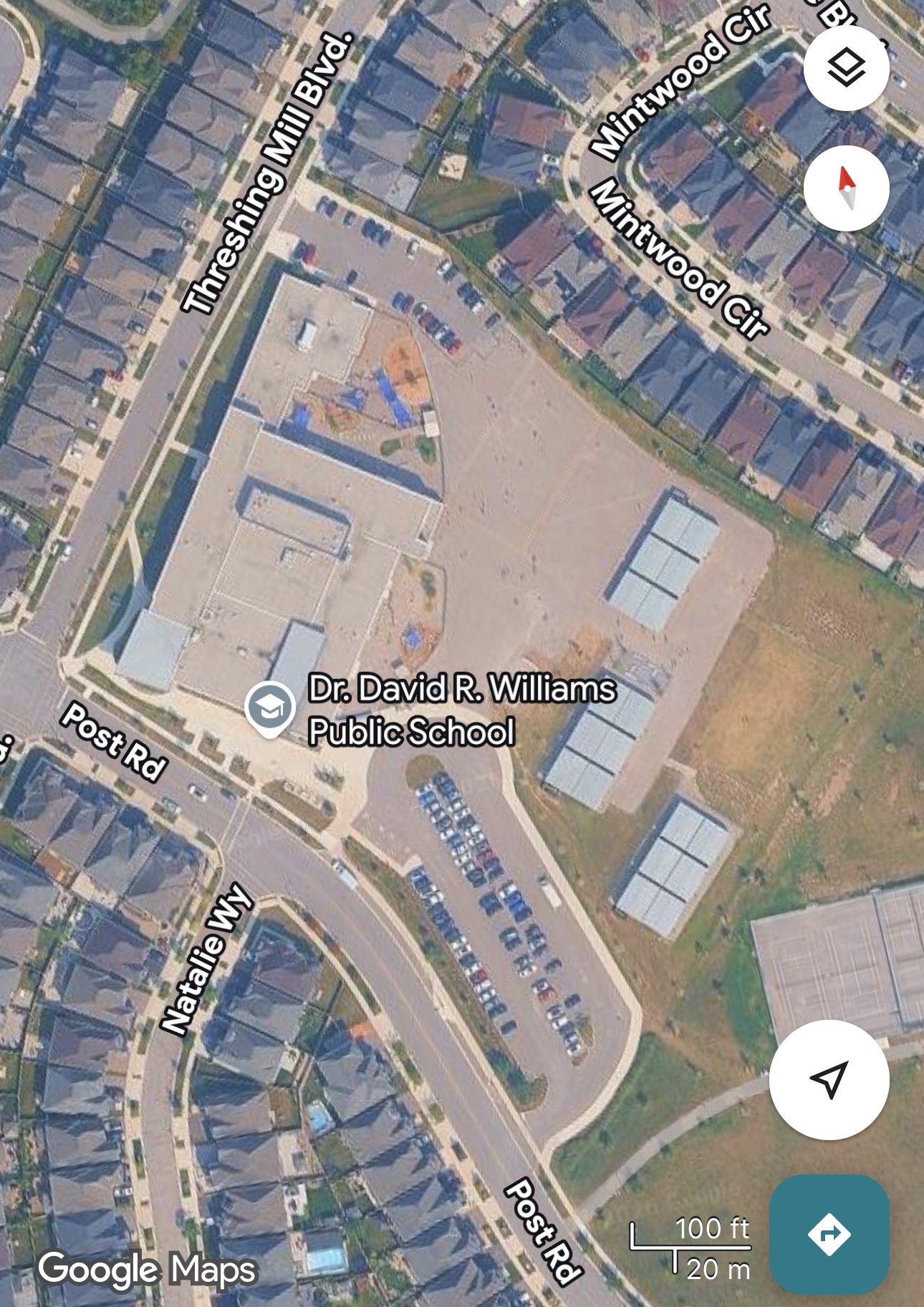
At a recent Town Council meeting, I sat through the Neatt public meeting, on Neyagawa and Dundas, and listened to a young girl from Ward 7 who stood up and described what it's like to learn in a portable: the cold, the cramped space, being shuffled outside the main school. A child had to come and explain that to the adults making the decisions. I was in the room.
At that same meeting, neighbour after neighbour voiced the same worry in different words: the homes keep coming, and nothing that supports them is keeping up. That night is a big part of why I decided to run.
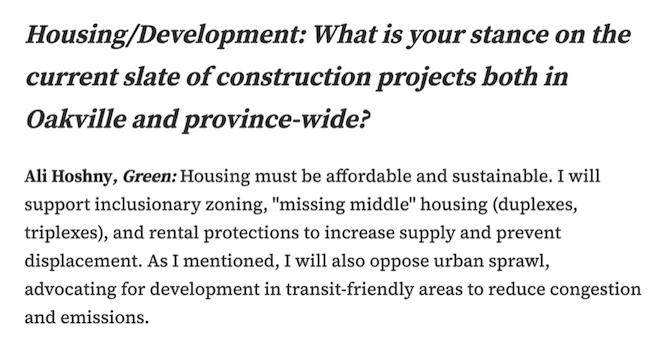
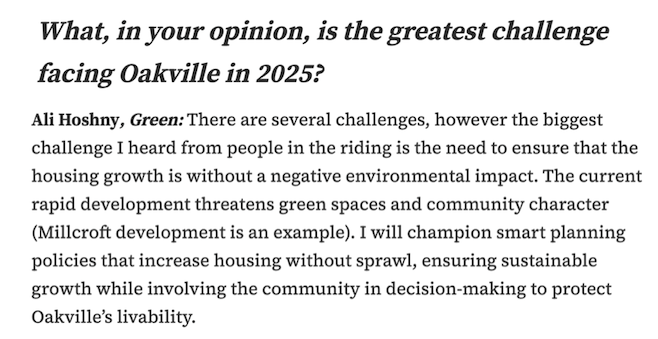
Ward 7 is absorbing more than 40 percent of all the new housing planned for Oakville, roughly 14,000 units [1, 2], and yet our kids are in portables, our roads are clogged, and the amenities we were promised keep showing up a decade late and millions over budget. I'm not against growth. I'm against growth that arrives with no plan for the schools, roads, and services that make it livable.
What follows is what's actually coming, why the gap keeps happening, and the specific, legal things I'll do with my vote to fix it. It's a long read, because you deserve more than a slogan.
Why I'm Writing This
Before we moved to Ward 7 in 2012, my family lived in Ward 5. That matters to how I see all of this. Ward 5 is a mature, settled part of Oakville. Established neighbourhoods, a community centre already up and running, parks that were already there, schools with room to breathe, enough spaces for parking for both residents and visitors. It's what a finished community feels like. The infrastructure came first, and the homes filled in around it.
Then we moved north, to Glenorchy, drawn by the same things that drew so many of you: new homes, green space, room for young families. Over the next fourteen years I watched something very different happen. In Ward 7 the homes came first and everything else was told to wait. We were promised a community centre and pool "in a couple of years." Our kids ended up in portables. The traffic thickened. Amenities that older wards simply had were, for us, always a few years out.
I'm not a politician. I'm a resident who has lived on both sides of that line, the finished community and the one perpetually catching up, and I've had enough of watching Ward 7 take the growth without getting the planning. That's why I'm running.
I Haven't Waited for a Title to Show Up
I didn't decide to pay attention the day I became a candidate. I've been showing up as a resident. I sat through the Neatt public meeting on Neyagawa and heard the concerns first-hand. I've followed the development applications landing in our ward, read the planning reports, and listened to neighbours who feel talked at rather than listened to. When a child stood before Council to describe life in a portable, I was there for that too.
I mention this because it's the honest basis for everything below. I'm not proposing ideas from a distance. I've watched, up close, how the current approach plays out for families, and I've done the homework on what the Town can actually do about it.
What's Actually Being Planned
The numbers are bigger than most people realize.
Across Oakville, Ontario has set a target of about 33,000 new homes by 2031, which Town Council adopted through its Housing Pledge [1]. At an illustrative two residents per home, that would represent roughly 66,000 new residents town-wide.
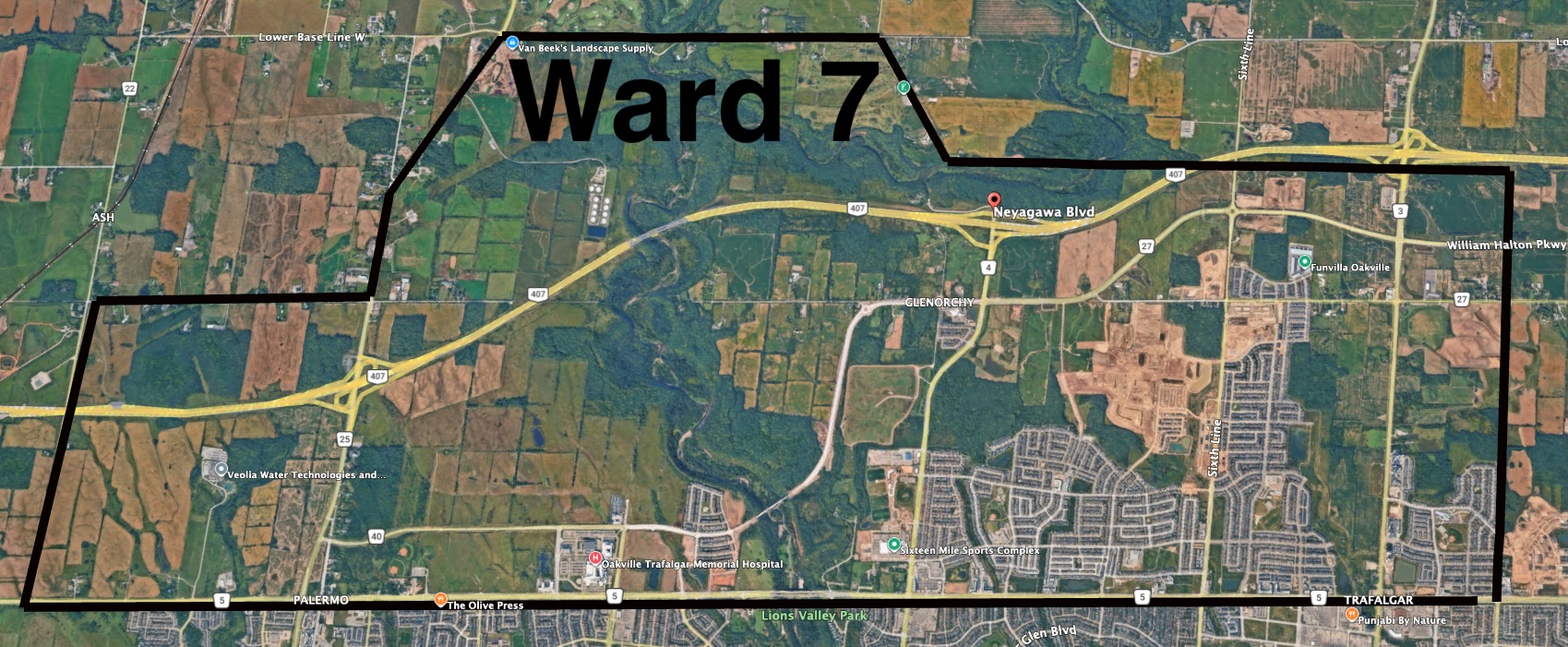
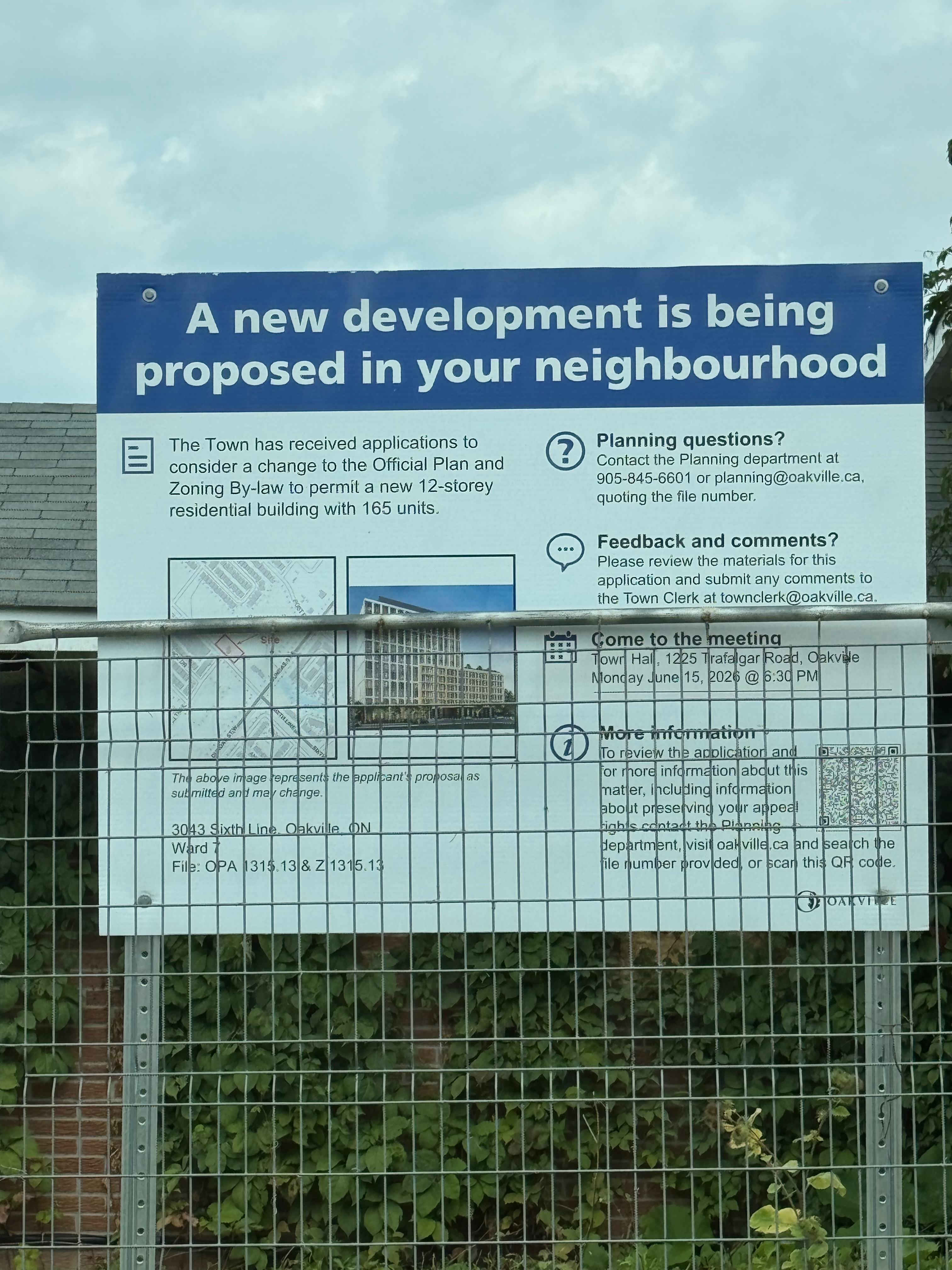
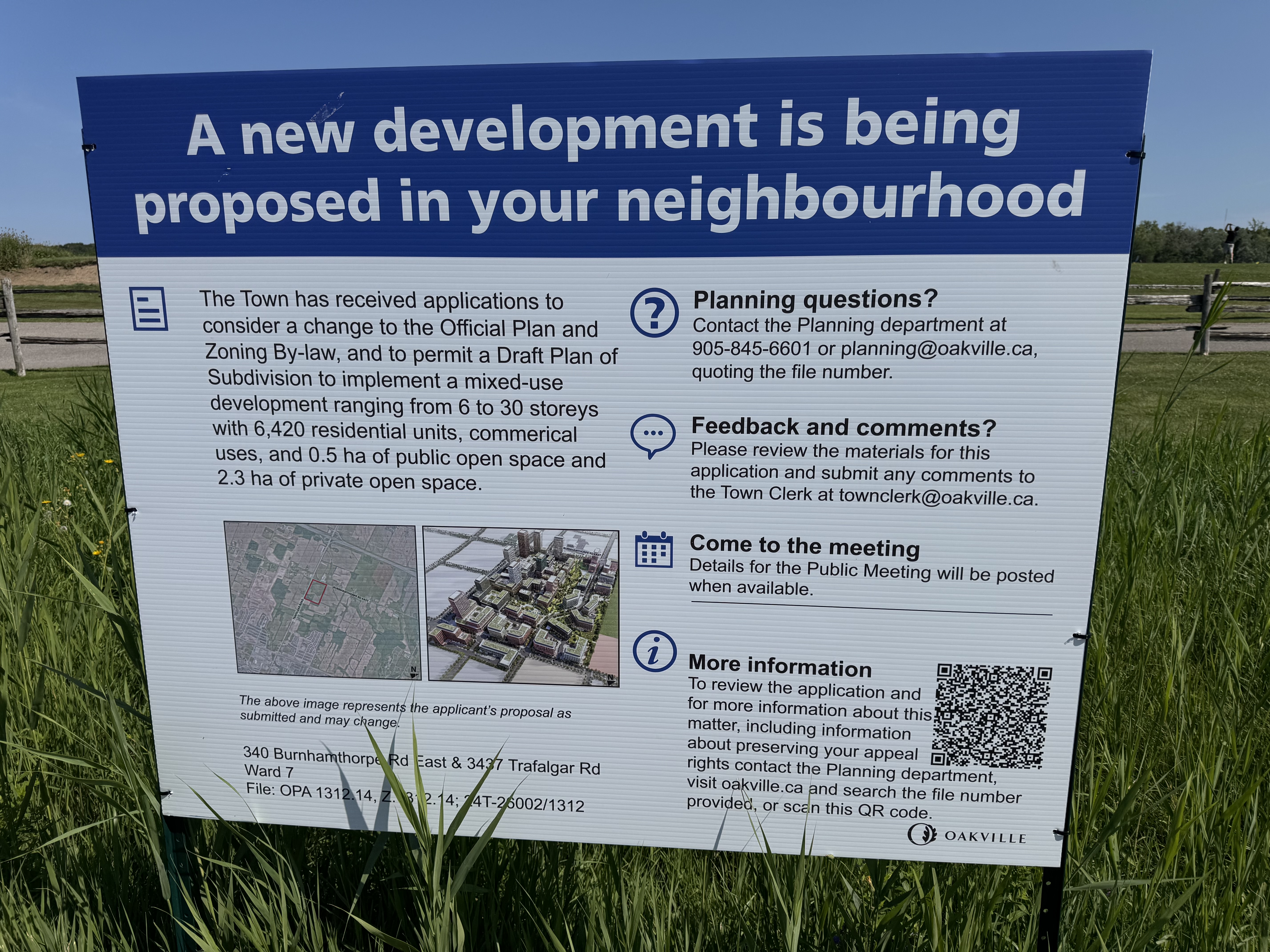
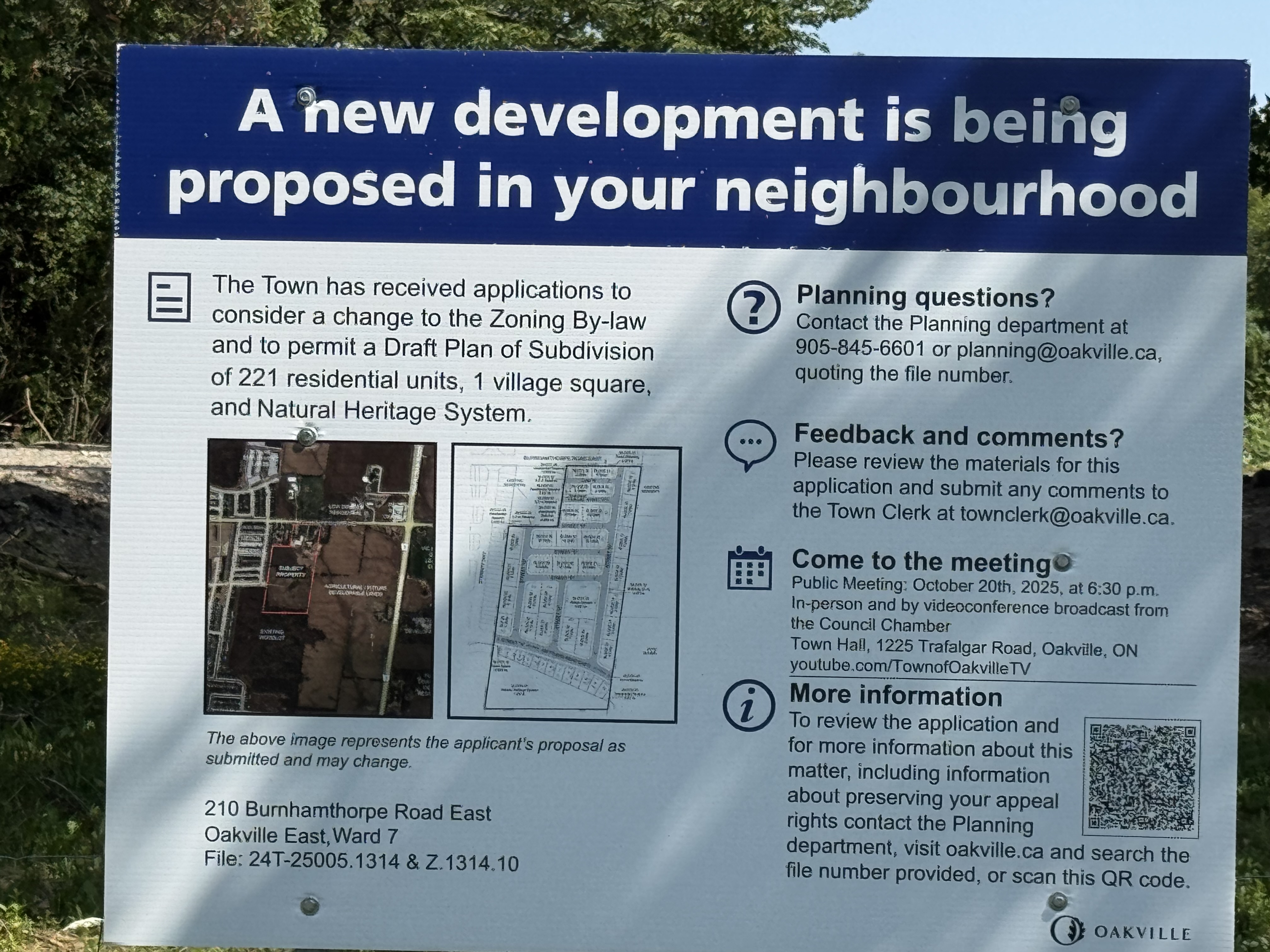
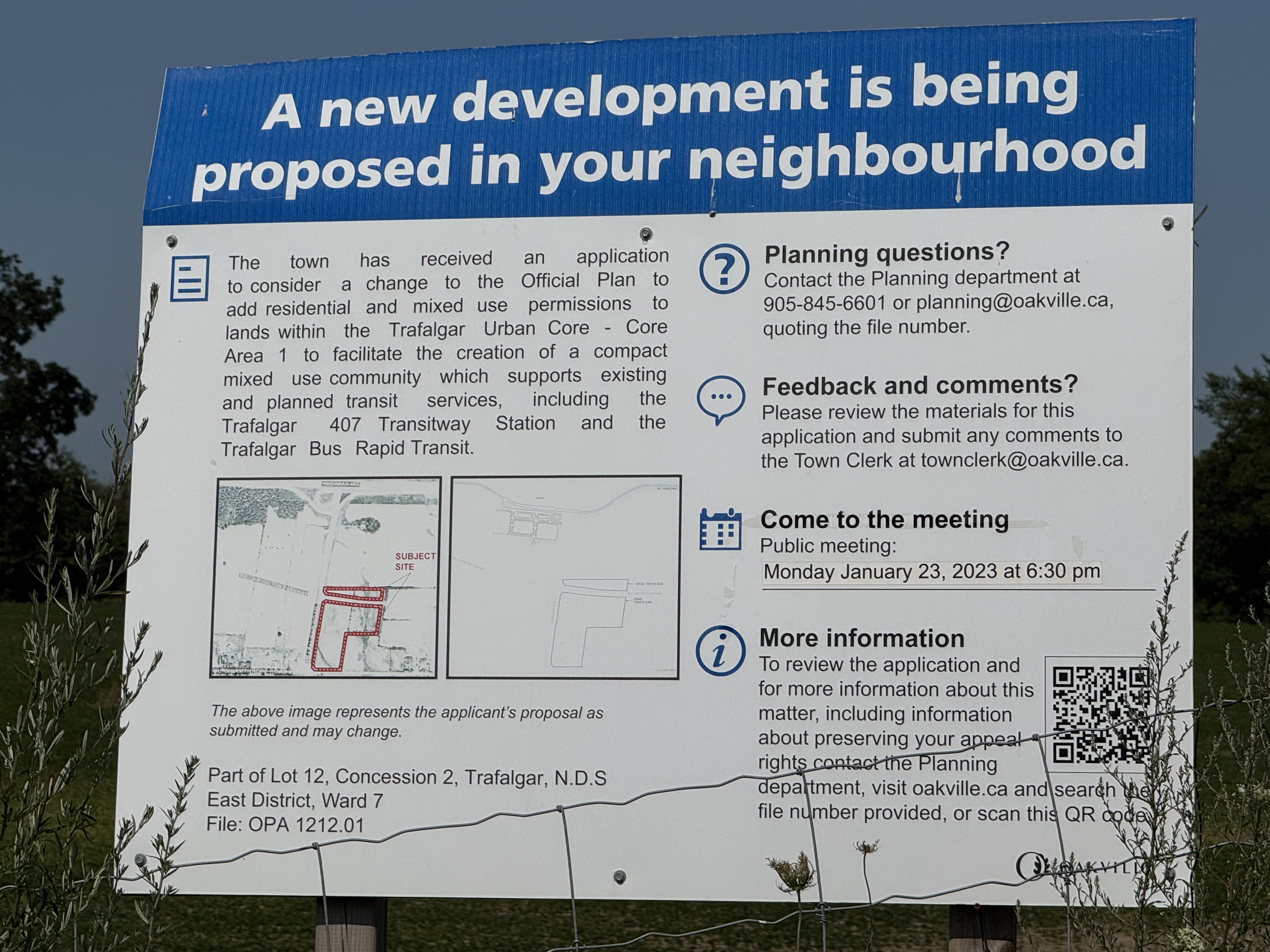
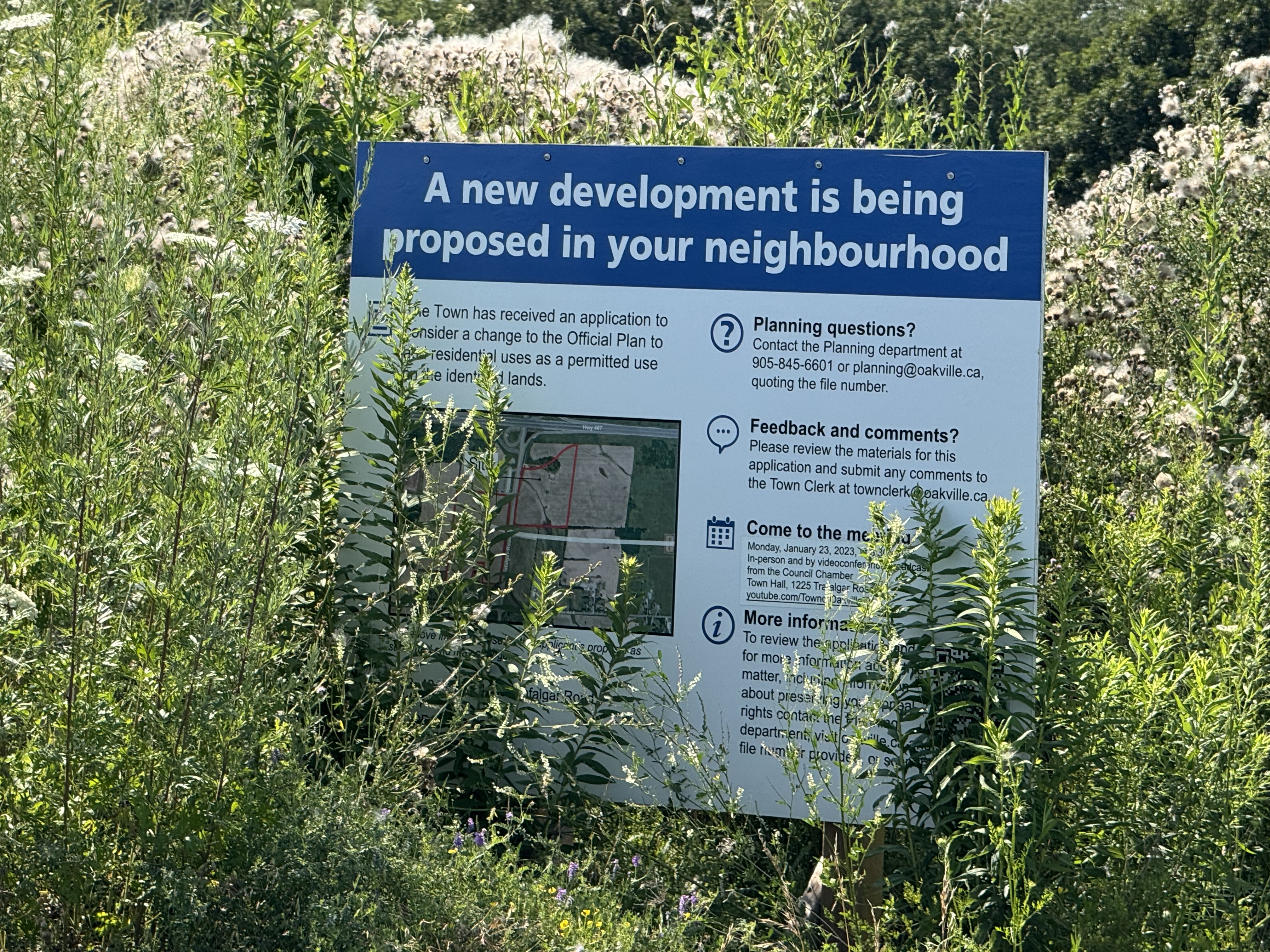
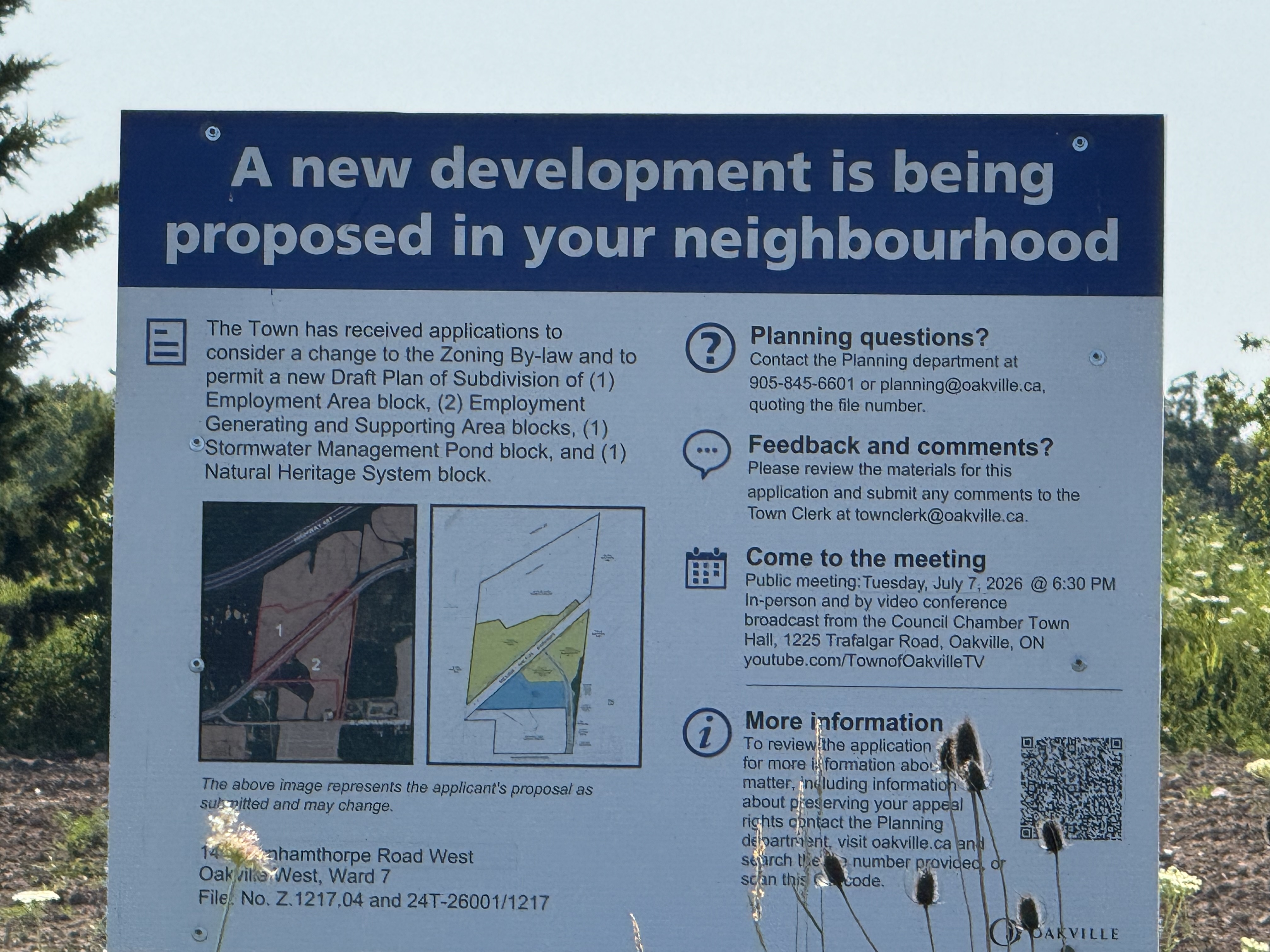
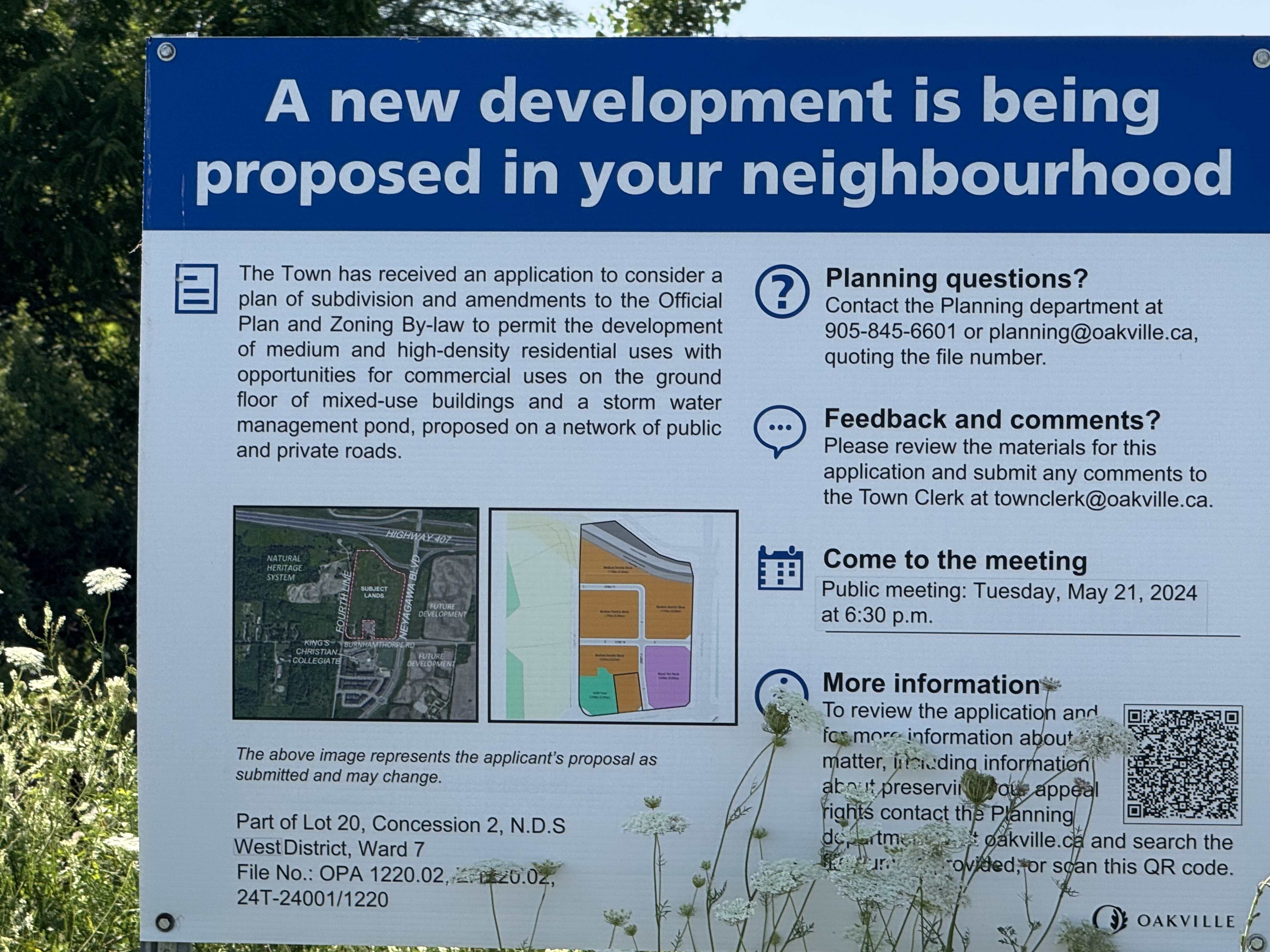
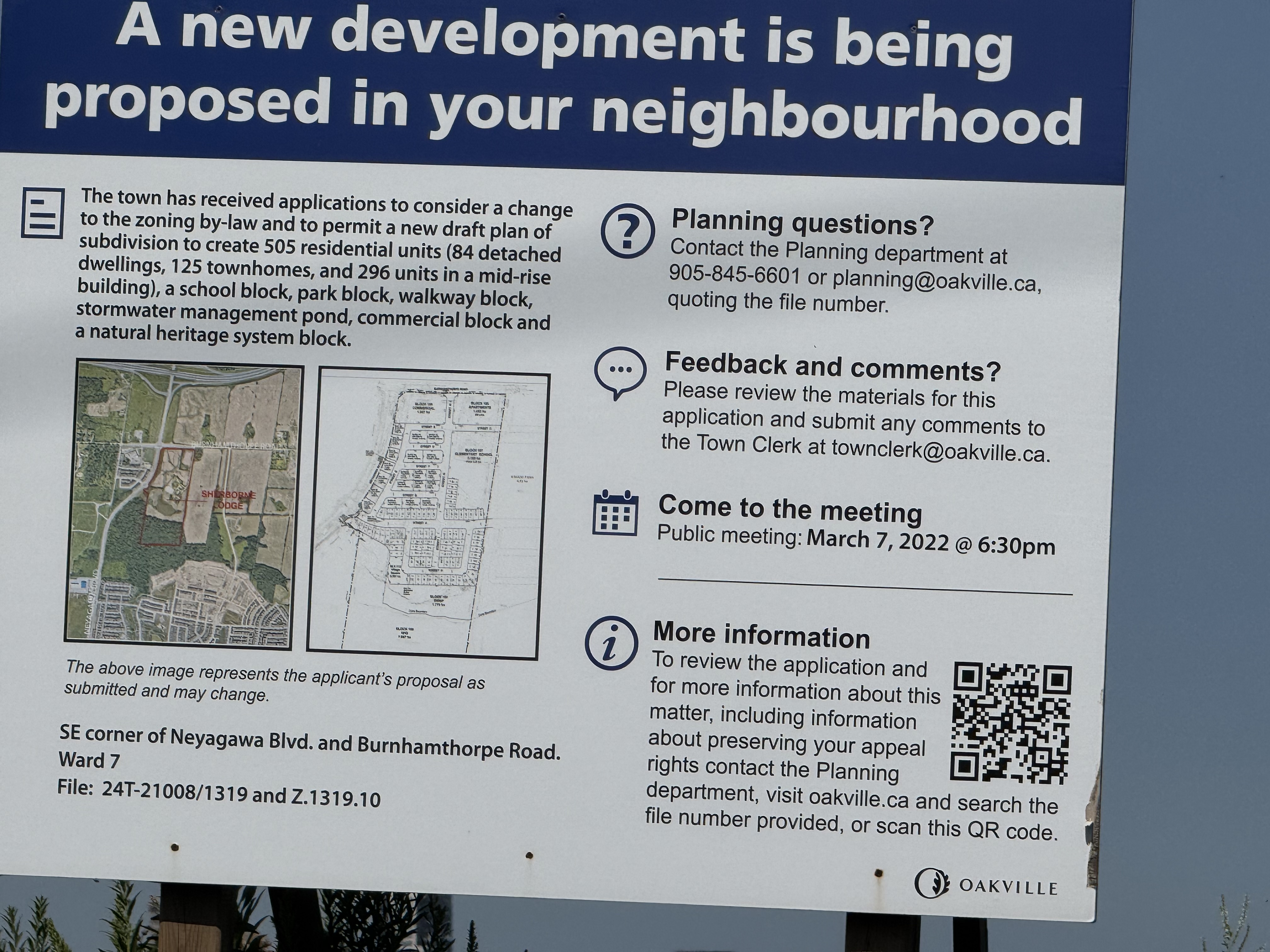
In Ward 7, my review of the current development applications points to roughly 14,000 proposed residential units [2, 3], more than 40 percent of all of Oakville's planned growth, concentrated in our ward. Four out of every ten new homes planned for the entire town are being asked for right here, in the community that already feels the squeeze. I've mapped where these developments are expected across Ward 7 so you can see it for yourself. (See the Ward 7 development map)
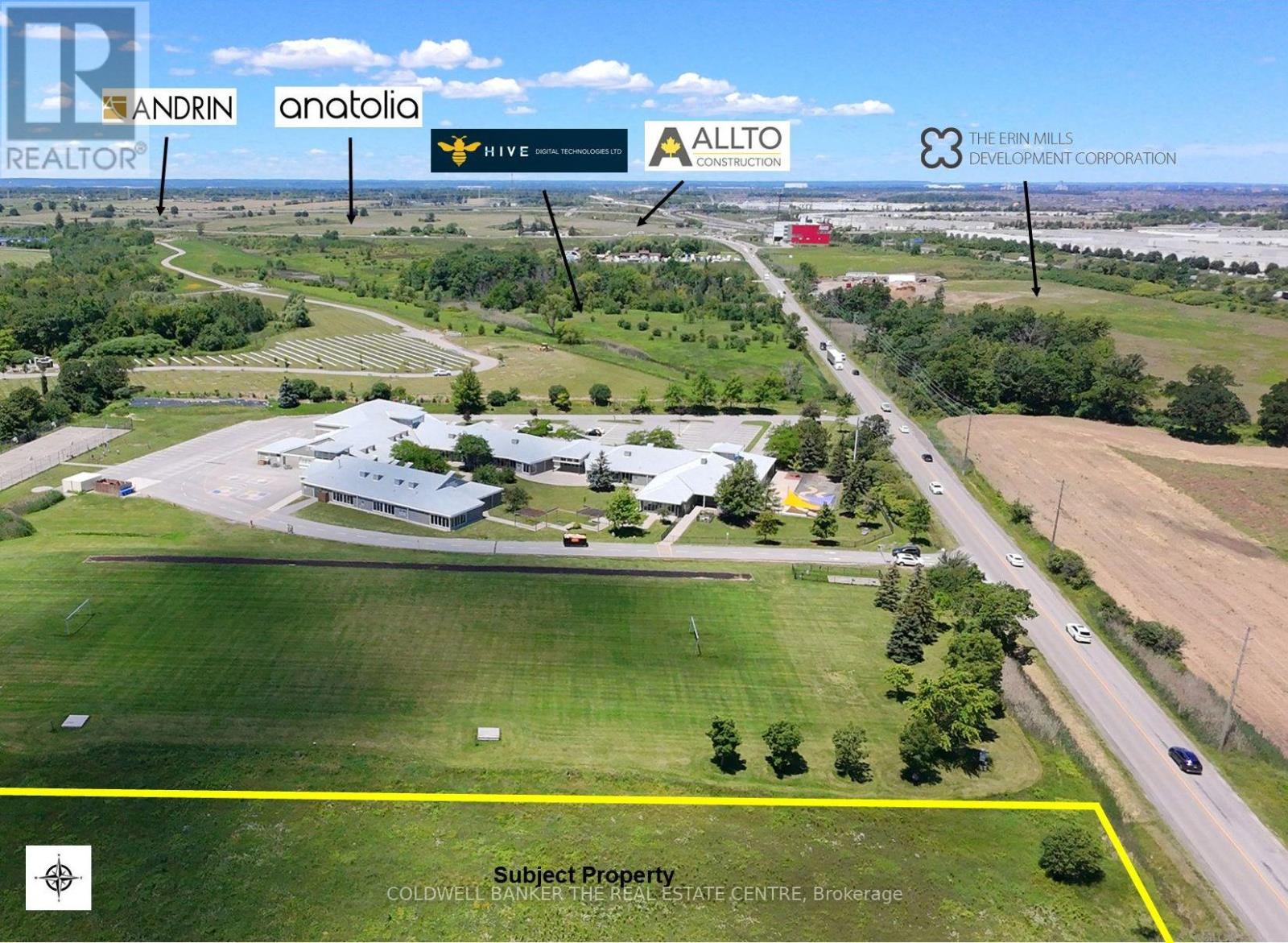
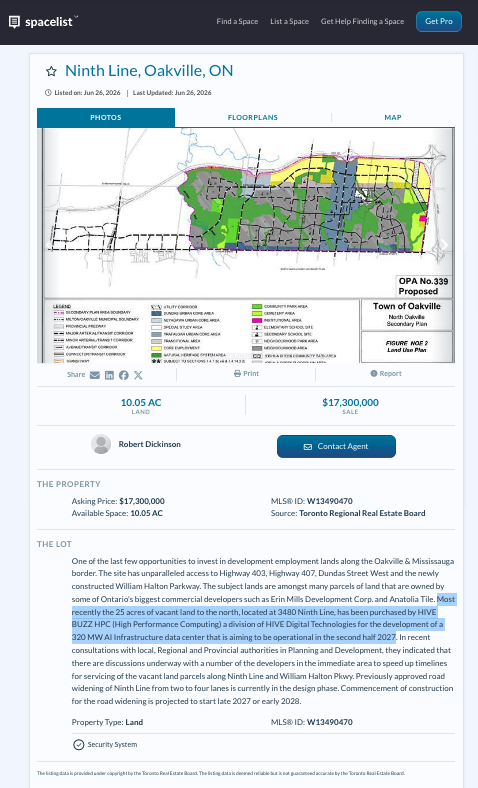
On top of the housing, two other major projects are in the pipeline. A Provincial Science Facility on the Trafalgar Road lands (a 7.5-acre plot of provincially owned land, a 229,000-square-foot complex in north Oakville, located just north of the Oakville Trafalgar Memorial Hospital) [5], and a proposed 320-megawatt AI data centre in North Oakville's employment lands (a 25-acre vacant property on the shared border of Oakville and Mississauga, at 3480 Ninth Line near Burnhamthorpe Road and William Halton Parkway, which sits in Ward 6) [4, 7, 8]. Each should be judged on its own merits, but all of it is landing in the same corner of town at the same time.
The Problem Isn't Growth. It's the Timing.
A newer resident recently asked me why our schools are so crowded when the Town keeps approving homes. I gave them the honest answer, and I'll give it to you too.
School capital planning and funding are primarily matters for the Province and the school boards, not the Town. Enrolment growth is a major driver of accommodation planning, but when the Town approves housing it doesn't order or fund a school to be built. Homes can go up quickly. A new provincially funded school takes far longer to be approved, funded, and built. That is the gap. It's why HDSB's planning data has shown Oakville schools running above capacity, roughly 101 percent at the elementary level [9] and 108 percent at the secondary level [10] in its 2022 accommodation planning, with local high schools maxed out on portables and North Oakville students being redirected while we wait for new schools to open [11, 12]. Mature wards south of the QEW, meanwhile, have stable or declining enrolment. That's not luck. It's sequencing.
I won't hide behind "education is provincial." It's true, but it becomes a cop-out when it's used to avoid the levers the Town does control.
Beyond schools, roughly 14,000 new units in our ward means:
- Traffic. Thousands more daily vehicle trips onto Dundas, Neyagawa, and others, roads already under strain, and eventually William Halton too. [22, 23]
-
Parking. High-density towers next to major employment uses push overflow onto residential streets.
-
Utilities. More load on water, wastewater, and stormwater. And while the proposed 320 MW data centre sits in Ward 6, a facility that size still means significant new demand on the electrical grid and utilities that the Town is studying [6, 7], with effects that reach across North Oakville regardless of the ward line.
-
Community services. More pressure on parks, libraries, recreation programs, daycare, and the single hospital we have.
-
Essential services. Firefighting, paramedics, and basically all emergency response teams.
To Be Clear: I'm Not Anti-Housing
You'll hear the pushback, so let me answer it head-on: that infrastructure-first is just code for delay, and delay means fewer homes and higher prices.
It isn't. Young families need homes, mine included when we arrived, and Ward 7 will keep growing, as it should. What I'm against is building homes faster than the things that make them worth living in.
There is also a point here for every taxpayer. Planning infrastructure alongside growth is cheaper than retrofitting it afterward. Our own community centre is the proof. We waited more than a decade, watched the budget nearly double, and still lost the parking. Reactive planning didn't get us homes any faster. It got us a more expensive, less complete community service. Doing it right the first time is the fiscally responsible choice, not the obstructionist one.
Credit Where It's Due, and the Lesson In It
I won't pretend nothing good has happened. Through this period of intense growth, the Town advanced real wins for Ward 7: two new schools for our growing families, and the long-awaited expansion of the Sixteen Mile Sports Complex with its new community centre and library. I'm genuinely glad they exist. My neighbours and I use them, and I want to build on them, not tear them down.
But how we got the community centre, and how long it took, is a cautionary tale. The building itself is a good one, and I want that on the record. The problem was the wait. When my family moved from Ward 5 to Ward 7 in 2012, the next phase of that complex was described as being a couple of years out. In reality the community centre and library didn't open until the spring of 2026, with the pool and aquatics coming online in the months after. That's well over a decade later, built onto arena pads that had opened all the way back in 2010. [13]
It also came at a steep price. The project was originally budgeted at about $73 million. Council raised it to $106 million [14], and costs ultimately climbed to roughly $130 million, nearly double the original estimate, even after a planned parking structure was cut to save money. [15]
Construction costs did spike everywhere in those years. That's fair, and I won't pretend otherwise. But the long wait wasn't inflation. It was the reactive model at work: build the homes, and let the amenities catch up whenever they can. Ward 5 didn't make families wait this long for a pool. Ward 7 shouldn't have to either.
An Honest Word About the Job Itself
You should know exactly what this seat can and can't do, because I'd rather earn your vote with the truth than with a promise I can't keep. (Read more about the Town Councillor role)
A Town Councillor is one vote of many, and some of what shapes Ward 7 sits at other tables. School funding is provincial. Water, wastewater, and our biggest roads (Dundas, Trafalgar, Neyagawa) are Halton Region [23]. And Ward 7 actually has two council voices. So no councillor can single-handedly stop a project or build a school.
That isn't a reason to shrug. It's the reason the job matters. The Town councillor's real power is to use the planning tools the Town does control, and to be the relentless coordinator who holds the Region, the school boards, and the Province to account before shovels hit the ground. That coordination is exactly what's been missing. Here's how I'd do it.
What I'd Do Differently: Plan Infrastructure First
The tools I'm proposing are grounded in the Town's existing planning, budgeting, and development-approval powers. Some require Council approval, and some require cooperation from Halton Region, the school boards, or the Province. My commitment is to use the Town's tools unwaveringly and transparently, and to coordinate with the governments that control the pieces the Town does not.
1. Use holding provisions to sequence growth to infrastructure
Section 36 of Ontario's Planning Act lets the Town attach a holding symbol, an "H," to a rezoning [16]. The land gets its future zoning, but development can't proceed until specific conditions are met: servicing confirmed, road improvements secured, a school site arrangement in place, an intersection upgraded. Municipalities across Ontario use this routinely. Toronto holds development until specific facilities and servicing are in place, and London ties it to confirmed servicing capacity and signed development agreements [19]. Oakville already uses "H" symbols in North Oakville [17, 18]. The real question is whether the conditions attached to them are ambitious enough. Where legally available and supported by the Official Plan and implementing by-law, I'll push to use this tool far more assertively, so that development is tied to the infrastructure that makes a neighbourhood livable. I'll be clear about the limits, too: once a hold's statutory conditions are met, Council isn't necessarily free to refuse to lift it. The leverage is in setting ambitious conditions up front.
2. Turn community benefits into real community assets, not just cash
For qualifying high-density developments of five or more storeys with ten or more residential units, Oakville levies a Community Benefits Charge of up to 4 percent of land value [20]. (The charge is authorized under Section 37 of the Planning Act, technically Section 37.1 following the Bill 197 amendments, and set by the Town's own by-law.) [16] The law lets developers meet part of that obligation with in-kind contributions instead of cash. On a project the scale of the ones proposed here, 4 percent is not small. High-density land in this corridor trades in the millions of dollars per acre, so a multi-block, thousand-plus-unit project can carry a community-benefit obligation in the low millions, treat this as an order-of-magnitude figure, since the exact amount depends on the appraised land value at the valuation date. That is enough to help fund a daycare space, a chunk of structured parking, or a park upgrade rather than a modest cheque absorbed into a town-wide account. In-kind contributions are discretionary and must fit the Town's CBC strategy and approval process, but where that framework permits, I'll advocate to steer eligible benefits toward what Ward 7 actually needs on site or nearby, secured in an agreement and registered on title so the commitment survives a change of ownership. [21]
3. Learn from towns that have closed the gap
The current council has leaned on the traditional toolkit to manage growth's side effects: road widenings, signal-timing changes, new pedestrian crossovers, and advocacy letters to the Province for school funding. Those measures matter and should continue. But on their own they can't keep pace with 14,000 new units. They treat the symptoms after the fact. We also need the creative tools that other growing communities have used:
-
Shared infrastructure. Co-locating schools, daycares, libraries, and gyms in one building, and building up where land is scarce, so a single site does double duty. Vaughan and Markham (Cornell) built this into their official plans and new communities, and Toronto delivered a vertical school-and-community-centre hub.
-
Real negotiations with developers. Using holding provisions and benefit agreements as leverage to secure roads, servicing, and community space as a condition of approval, not as an afterthought. Markham negotiated an elementary school, affordable units, and community space directly into the Markham Centre development deal.
-
Locking down land for schools early. Reserving and protecting school and park sites at the front end of a development, before land is gone or priced out of reach. Edmonton's long-standing Joint Use Agreement with its school boards, and York Region's school-site strategies in fast-growing Markham, both work to secure sites ahead of the need.
These are credible ideas with real precedents behind them, and I'll do the detailed work to bring the right ones to Ward 7.
4. Give residents a single, clear picture of what's being built
Right now, if you visit the Town's website to understand what's coming to Ward 7, you can find individual applications and a map, but there's no consolidated view that shows how many units have been applied for versus approved versus actually under construction [2]. There's no easy way for a resident to see the whole picture at a glance, and each application is largely studied in isolation.
I'll push on both fronts: a plain-language, consolidated public view of all Ward 7 development, applied, approved, and in progress, and a cumulative infrastructure and traffic assessment that models the 14,000 units, the Science Facility, and the data centre together, against our 2025 Transportation Master Plan. You can't manage what you haven't measured, and residents deserve to see the combined picture, not separate studies that each say "manageable."
The same transparency gap applies to the holding provisions I described above. An "H" is attached to land in one set of by-laws and lifted later in another, and there's no single resident-facing reporting of the two. And the raw count isn't even the real question. When an "H" is lifted, it means conditions were met, but were the conditions ambitious enough? Did they secure schools, roads, and community space, or just the minimum water-and-wastewater servicing sign-off? That's the information residents deserve, and I'll push for it to be published plainly: what each holding condition required, and what the community actually got when it came off.
5. Get the big employment projects right, deliberately
Following growing public concern and extensive pressure from residents and residents groups across Oakville, the Town took a responsible first step by passing a one-year Interim Control By-law that pauses new data-centre approvals while it studies the land-use, noise, energy, and water impacts [6]. I support using that pause well. A 320 MW AI data centre, even sitting in Ward 6, is not a normal industrial tenant and will have an impact across Oakville [7]. I'll advocate and press for clear, enforceable standards on power, water, noise, and cost recovery before any approval, so residents aren't left subsidizing a private facility's infrastructure. Residents' health and quality of life should never be compromised in the name of so-called innovation.
6. Bring lobbying into the light with a public registry
Right now, developers and their consultants can lobby Town Council and senior staff on the very applications reshaping Ward 7, and residents have no way to see who is meeting whom, or on what. This isn't hypothetical. In early 2026, after unanimously directing staff to design one just months earlier, Council voted 9 to 6 against creating a public lobbyist registry, choosing internal policy tweaks instead [24]. Those internal enhancements are better than nothing, but they aren't public, and that's the whole point. It leaves Oakville unusual among its peers: Toronto, Ottawa, Hamilton, Burlington, Waterloo, Niagara, Vaughan, Peel, and Collingwood all have registries [24].
A lobbyist registry doesn't restrict anyone's access to their councillor. It simply creates a searchable public record of who is lobbying, whom, and on what issue, so residents can see the same influence on development decisions that insiders already do. The Town itself named a lobbyist registry as an initiative in 2025 [25]. I support a properly scoped, cost-conscious lobbyist registry, with stronger gift and disclosure rules alongside it, and I'll vote for one. When billions of dollars of development are on the table, the people who live here deserve to know who's at the table too.
What I'll Do With My Vote
Enough about what should happen. Here is what I will personally do with the one thing I'd directly control, my vote and my voice on Council:
-
I will make binding infrastructure commitments a condition of my support for major applications, using holding provisions, and I will not vote to lift an "H" until the conditions attached to it are actually met, a condition on title, not a promise from a developer.
-
I will push every qualifying high-rise to deliver its community benefit as real infrastructure in Ward 7 where the legislation and Council approvals permit, whether daycare, parking, parks, fire and emergency services, or transit, secured on title rather than cash that disperses across the town.
-
I will vote against premature approvals that arrive without a credible plan for the schools, roads, and servicing to support them.
-
I will be the coordinator that's been missing, pressing Halton Region on servicing and roads, and working with the school boards and the Province on school funding, so the pieces line up instead of arriving years apart.
-
I will be the advocate for the essential services Ward 7 needs to function safely.
-
I will work for the transparency residents are owed: a consolidated public view of Ward 7 development, published holding-condition records, and I'll work hard to build the votes for a public lobbyist registry with stronger gift and disclosure rules.
None of this requires new provincial powers. It requires a councillor who knows these tools, uses them, and won't be waved off. That's the job I'm asking to do.
The Bottom Line
I've lived in a finished Oakville ward and an unfinished one, and I know the difference because I've raised my family in both. Ward 7 doesn't need someone to fear growth. It needs someone who will insist growth comes with a plan, the way older wards had one.
Building homes is only part of building a community. Building the infrastructure that supports them is what makes Ward 7 a place we're proud to call home, today and for the families who come next.
LET'S STAY CONNECTED
I am always available to listen, chat, or answer your questions about the neighbourhood we share. Just reach out via Email: connect@votealihosny.ca, Facebook or Instagram or Nextdoor.If you have any new facts or information, kindly share them as we are all in this together.
If that's the Ward 7 you want too, I'd be honoured to earn your vote on October 26.
ADVANCE VOTING: OCT 7–10 & OCT 13–18 / VOTING DAY: OCTOBER 26 · 10AM – 8PM.
From Glenorchy. For Ward 7.
Ali Hosny
September 1st, 2026
Ward 7 resident since 2012 (Ward 5 from 2005), Candidate for Ward 7 Town Councillor
https://votealihosny.ca/
--------------------------------------------------
Sources & References
(Numbered to match the [n] markers throughout the plan above.)1. Town of Oakville — Housing Pledge
Ontario's 33,000-home-by-2031 target and Council's adoption of the Housing Pledge.
2. Town of Oakville — Ward 7 Development & Site Plan Applications
Current Ward 7 application list; basis for the ~14,000-unit pipeline review.
3. Town of Oakville — Westerkirk (340 Burnhamthorpe Rd E & 3437 Trafalgar Rd)
A single current Ward 7 application of 6,420 units.
4. Town of Oakville — Maps & Ward Boundaries
Official ward-boundary reference confirming 3480 Ninth Line is in Ward 6.
5. Town of Oakville — Science Facility Transportation Impact Study
7.5-acre, 229,000-sq-ft provincial science complex, location and description.
6. Town of Oakville — Data-Centre Interim Control By-law
One-year ICBL pausing new data-centre approvals; study scope; no formal application received.
7. HIVE Digital Technologies — 320 MW GTA AI Infrastructure Announcement
Company announcement of the 320-MW project (design described as closed-loop cooling).
8. Town of Oakville — 3480 Ninth Line Heritage Designation
Property identification and location for the reported data-centre site (Ward 6).
9. HDSB — Oakville 2022 Long-Term Accommodation Plan (LTAP) Summary
Oakville elementary utilization data, including the ~101% figure.
10. Oakville News — North Oakville Schools / 108% Secondary
108% secondary utilization figure and North Oakville school pressures.
11. HDSB — North Oakville Secondary School Temporary Enrolment Redirection
Redirection history, portable-capacity pressure, and current status.
12. HDSB — Oakville NE #1 Secondary School Boundary Review
2026 boundary-review status and new-school planning.
13. Town of Oakville — Sixteen Mile Sports Complex
Opening status, 2010 arena pads, project timeline, and current facilities.
14. Oakville News — North Park Costs Rise by $33 Million
$73M to $106M budget increase and parking-structure decision.
15. Oakville News — North Park Project Over Budget & Behind Schedule
The ~$130M figure and revised timeline.
16. Ontario — Planning Act (ss. 36 & 37 / 37.1)
Statutory basis for holding provisions and community-benefit charges.
17. Town of Oakville — Zoning By-law Part 16: Holding Provisions
Oakville's "H" provisions and the conditions for their removal.
18. Town of Oakville — 1429 Dundas Street East H-Removal Notice
Oakville example of an "H" tied to water/wastewater servicing.
19. City of Toronto — Holding By-law Amendment
Official examples of "H" conditions used for infrastructure/servicing.
20. Town of Oakville — Community Benefits Charge
5+ storeys / 10+ units threshold; 4% of land value; valuation and in-kind framework.
21. Town of Oakville — Community Benefits Charge Procedure
Discretionary in-kind contributions; agreements, securities, and registration on title.
22. Halton Region — William Halton Parkway Now Open
Current status of William Halton Parkway.
23. Halton Region — Road Safety / Regional Roads
Regional-road jurisdiction in Oakville (Dundas, Trafalgar, Neyagawa).
24. Oakville News — Lobbyist Registry Vote
The 9-6 vote, ~$171,300 cost estimate, July 2025 direction, and municipal comparison.
25. Town of Oakville — 2025 State of the Town
Lobbyist registry identified as a 2025 initiative.